
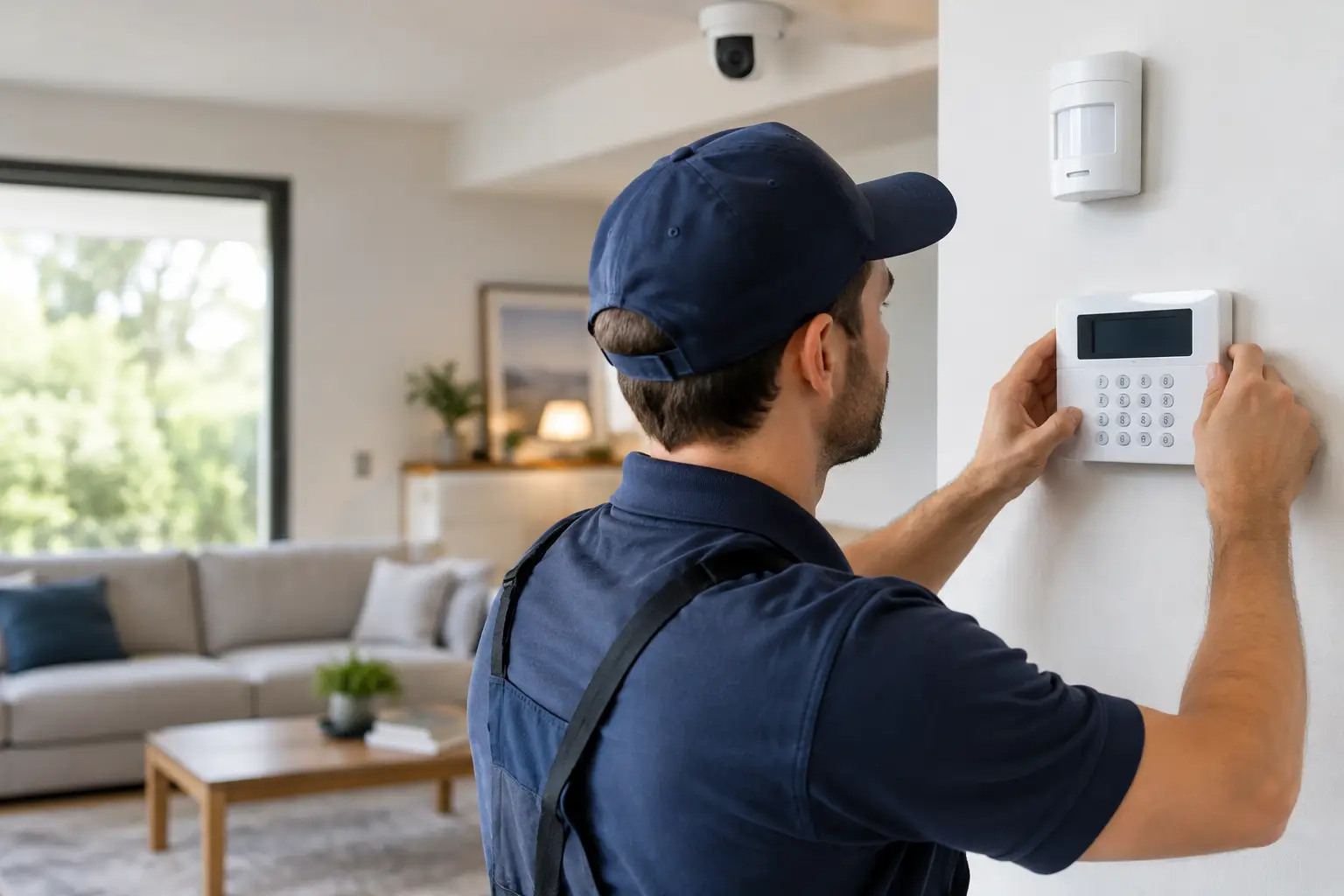
A good home alarm installation is not about filling every room with gadgets or buying the biggest panel on offer. It is about making the right areas difficult to enter, making the system simple enough to use every day, and fitting it properly so it does not become another source of false alerts and frustration.
For most homes, the weak points are predictable: front and rear doors, accessible windows, side gates, garages, conservatories and any ground-floor extension. The right alarm system covers those areas without turning normal family life into a string of beeps, app notifications and accidental activations.
Start with the property, not the alarm kit
Every house, bungalow and flat needs a slightly different plan. A detached home with a side passage has different risks from a first-floor flat. A family with a dog needs a different sensor layout from a couple who are away most weekends. That is why a proper survey matters before anybody starts drilling holes.
An engineer should walk through the property with you and ask practical questions. Which doors are used daily? Is there a pet that moves downstairs at night? Do you want the alarm set while you sleep? Is the garage attached to the house? Are you renovating, or is the décor finished and cables need to be kept out of sight?
This conversation avoids the usual mistakes. A motion detector aimed straight at a staircase can cause problems when the household is moving about upstairs. A door contact on an old, poorly aligned frame may need careful positioning to work reliably. A visible external bell box may be a useful deterrent, but only if the rest of the system is designed to detect an intrusion quickly.
We will not sell you kit you do not need. Sometimes a straightforward alarm covering the main entry points is the sensible answer. In other properties, adding a video doorbell, CCTV cameras or a wired network connection makes better sense, especially where you want to check activity while away.
Wired or wireless home alarm installation?
Both options can work very well. The best choice depends on the building, the finish you want and how much work is already planned.
When wired alarms are the better choice
A wired alarm is often ideal during a renovation, extension or new build, when cables can be routed before walls are plastered or decorated. It removes the need to change sensor batteries and gives a very dependable connection between the panel and devices.
It does take more installation work, though. In a finished home, cable routes must be planned carefully to avoid unsightly trunking or unnecessary disruption. A tidy engineer can often use lofts, floor voids, cupboards and existing routes, but there are limits. There is no point promising an invisible cable run where the building simply will not allow one.
When wireless alarms make sense
Wireless systems are usually the practical option for occupied homes, rented properties and quick upgrades. Quality wireless sensors are reliable when they are fitted correctly, tested properly and maintained. They can also be expanded later if you convert a garage, add an office or change how you use a room.
The trade-off is maintenance. Batteries will eventually need changing, and the system should tell you before they go flat. Wireless signals can also be affected by awkward building layouts, thick walls and metalwork. That does not mean wireless is unsuitable, only that placement and testing matter more than a box bought online can suggest.
A good installer explains the options in plain English, rather than claiming one type is always better.
What should an alarm system cover?
Most domestic alarms use a combination of door contacts, window contacts, motion detectors, a control panel, keypads or fobs, an internal sounder and an external bell box. You may also choose app control and alerts to your mobile phone.
The key is to protect the route into the property and the areas an intruder is likely to cross. A front-door contact tells you the door has opened. A hallway motion sensor then adds another layer of detection. Rear doors and accessible windows deserve the same thought, particularly where a garden offers cover from the road.
Not every window needs a contact. In some homes, a well-positioned motion detector is enough. In others, such as a large ground-floor extension with several doors, individual contacts provide more useful information and allow you to set parts of the system separately. If you want to arm the downstairs area overnight while still moving around upstairs, that needs to be planned from the start.
Garages, sheds and outbuildings are worth discussing too. A detached shed may be better protected with a separate alarm or a camera, depending on power, distance and what is stored inside. An attached garage is often part of the main alarm plan because it may offer a route into the house.
Placement matters more than people think
A sensor can be perfectly good and still perform badly if it is in the wrong place. Motion detectors should not face direct sunlight, radiators, open fires or air vents where sudden temperature changes can cause nuisance activations. They should also be mounted at the correct height and angled to cover the intended route, not simply placed where there is an easy bit of wall.
Door and window contacts need a stable, consistent gap between the magnet and the sensor. If a door catches, twists with the weather or has loose hinges, fitting the contact without checking the frame can lead to recurring faults.
The external bell box needs to be visible enough to act as a deterrent and high enough to make tampering difficult. The alarm panel should be accessible for everyday use but not the first thing someone sees through the front door. These are small decisions, but they make the difference between an installation that works for years and one that creates call-backs.
Do not overlook the internet connection
Many modern alarms can send app notifications when the system is armed, disarmed or triggered. That is useful, but it relies on a stable connection and sensible settings. If your Wi-Fi regularly drops out at the far end of the house, an alarm app may not report as quickly as you expect.
This is especially relevant in larger properties, extensions and garden offices. Sometimes the answer is a properly positioned Wi-Fi access point or Ethernet cable rather than hoping the router in the hallway reaches everywhere. If you have cameras, doorbells and an alarm all sharing poor Wi-Fi, addressing the network first can save a lot of headaches.
You should also decide who receives alerts. A household where every person gets every notification can quickly start ignoring them. It is usually better to keep alerts relevant and make sure at least one responsible person knows how to respond.
A tidy installation should include testing
Fitting the equipment is only part of the job. Before an engineer leaves, every device should be tested: each contact, motion detector, siren, keypad, app notification and part-set mode. You should be shown how to arm and disarm the system, what the warning tones mean and how to respond if an alert comes through.
Ask about battery replacement, servicing and the warranty. Cheap systems can look attractive until you need support, a replacement part or somebody to diagnose why a sensor has stopped communicating. Fair pricing is not just the initial quote. It is knowing what happens if there is a problem later.
Speedy Aerials provides direct, engineer-led advice, free call-outs and quotations, and a two-year parts-and-labour warranty on smart-home equipment. With stocked vans and 36 years of experience, the aim is to complete the work properly on the first visit, not leave you waiting for another appointment.
Common home alarm installation questions
Can I have an alarm if I have pets?
Yes. Pet-friendly motion sensors can reduce false activations, but they are not magic. The size and behaviour of the pet, furniture it climbs on and the rooms it uses all affect the design. In some homes, contacts on doors and windows are a better option than relying heavily on motion sensors.
Can tenants install an alarm?
Usually, but ask the landlord first, particularly if drilling, an external bell box or hard-wired equipment is involved. A wireless alarm may be more suitable for a rented home because it can cause less disruption and may be easier to remove when you move.
Will an alarm work during a power cut?
A properly specified system should have battery back-up, but ask how long it is designed to run and whether app alerts depend on your broadband router staying powered. If security is critical, this detail should not be assumed.
Do I need CCTV as well?
Not always. An alarm is designed to detect and deter. CCTV helps you see what happened and check activity remotely. They work well together, but the right choice depends on your property, budget and what would give you real peace of mind.
The best alarm is the one you can set confidently every night and leave to do its job. Get the layout right, keep the installation tidy, test everything before sign-off, and you are far less likely to need somebody back to fix a problem that should have been prevented in the first place.